

Meet The Founder Betting On Light As The Future Of AI Chip Technology and Infrastructure.
Nicholas Harris, CEO of Lightmatter, sat down with Forbes to discuss building AI chip technology relying on light rather than electrical signals. Harris also discussed why the end of Moore’s Law and the AI boom created the perfect moment for photonics, enabling massive acceleration in AI model training and increased data center efficiency.
Lightmatter is a leader in photonic computing and interconnect technology that designs infrastructure for high-performance artificial intelligence (AI) using light instead of electrical signals. This approach aims to overcome the bandwidth and energy bottlenecks of traditional electronic components to scale AI infrastructure for future demands.
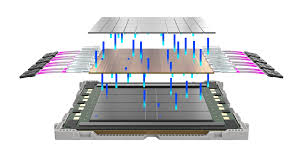
Key Aspects of Lightmatter’s Technology
- Addressing Bottlenecks: As AI chip processing power increases, the connections (interconnects) between chips become the primary limitation, causing GPUs to sit idle while waiting for data. Lightmatter’s photonic solutions significantly increase bandwidth and reduce latency and power consumption compared to conventional copper interconnects.
- Photonic Interconnects: The company’s core product is the Passage platform, a 3D-stacked silicon photonics engine that facilitates high-speed data transfer between processors. This technology uses light (photons) to move data, offering up to 100 times faster data movement between chips in some cases.
- Products & Integration:
- Passage M1000: An active photonic interposer (a layer that AI chips sit atop) with record-breaking optical bandwidth for large AI model training.
- Passage L200: A 3D co-packaged optics (CPO) chiplet that integrates directly with XPU (accelerator/processor) and switch designs for improved performance and energy efficiency.
- Envise: A complete photonic AI accelerator platform designed to run AI computations with greater power efficiency than traditional electronic systems.
- Scalability & Partnerships: Lightmatter’s technology enables large-scale AI clusters with up to millions of nodes. The company partners with major semiconductor and packaging firms like GlobalFoundries, Amkor, and ASE to ensure high-volume manufacturing and industry standardization. They are also part of the UALink Consortium, which aims to standardize AI interconnect solutions.
Benefits for AI Infrastructure
The move to photonics-based AI infrastructure offers several advantages:
- Higher Speed and Bandwidth: Light-based interconnects can transfer data at much faster speeds and higher densities than electrical signals, which is crucial for the massive datasets used in AI.
- Energy Efficiency: Photonic interconnects consume significantly less power, helping data centers manage their growing energy consumption and operating costs.
- Performance Scaling: By eliminating interconnect bottlenecks, Lightmatter enables faster training times for advanced AI models, allowing for the development of larger and more capable neural networks.
Lightmatter is positioned as a key player in the evolution of AI infrastructure, driving the transition from electronic-based to light-based computing solutions to meet the insatiable computational demands of modern AI. For more information, visit the official Lightmatter website.